
Heating Service for Comfortable, Reliable Winters
A furnace that short-cycles, a heat pump that runs but never warms the room, or a thermostat that reads the wrong temperature—these are the signs that a heating system needs professional attention. In the cold months across northern Illinois, a reliable heating system is not a luxury. It is the difference between a comfortable home and one that struggles to stay above 60 degrees during a hard freeze. Energy Services Air Conditioning and Heating Company delivers heating service that keeps residential systems running safely, efficiently, and predictably through the coldest stretches of the year.
At Energy Services Air Conditioning and Heating Company, we’re proud to provide the best in HVAC and indoor air quality services to residential customers throughout Chicago and the surrounding communities. Whether you need to find the right HVAC system for a new home or want to have maintenance completed on your current system, you can count on us. Our heating service covers everything from routine tune-ups to emergency repair, and we serve homeowners across Naperville.
What Heating Service Actually Covers
Heating service is broader than a single repair visit. It is a set of tasks that keep a system operating within its designed parameters. When we service a furnace, we check the burner assembly, inspect the heat exchanger for cracks, measure gas pressure, test the ignition system, and verify that the flue is venting exhaust correctly. Each of these checks addresses a specific failure mode. A cracked heat exchanger, for example, can release carbon monoxide into the living space, so we inspect it carefully during every service call.
For heat pumps and hybrid systems, the service focus shifts. We check refrigerant charge, verify the defrost cycle operates on schedule, and confirm the reversing valve switches correctly between heating and cooling modes. Boilers require attention to water pressure, expansion tanks, circulator pumps, and relief valves. Whatever the heat source in your home, our goal during a service visit is the same: confirm that the system produces the rated heat output while burning the least possible energy.
Why Regular Heating Maintenance Pays Off
Most heating failures do not happen without warning. A blower motor bearing wears gradually. A flame sensor accumulates a film that grows thicker over months. A clogged filter restricts airflow until the system overheats and shuts down on a safety limit. Regular maintenance catches these problems while they are still minor and inexpensive to correct. That is why we recommend a service visit each fall, before the heating season places full demand on the equipment.
Beyond preventing breakdowns, maintenance protects efficiency. A furnace with dirty burners and poor airflow burns more fuel to produce the same amount of heat. Over a full winter, that extra fuel use adds up. Clean, properly adjusted equipment holds its rated efficiency and keeps monthly energy costs closer to where they should be. Maintenance also protects the manufacturer’s warranty, since many warranties require documented annual service to remain valid.
Our Heating Service Process
When you schedule heating service with Energy Services Air Conditioning and Heating Company, our visit follows a consistent sequence. We do not skip steps or rush through the inspection, because a thorough process is what prevents surprise failures later in the season.
- Initial system assessment: We review the equipment, its age, and any symptoms you have noticed, then confirm the model and its service history.
- Safety inspection: We examine the heat exchanger, gas connections, electrical terminals, and venting to confirm the system operates without hazard.
- Component cleaning: We clean burners, the flame sensor, and the blower assembly, and we replace or clean the air filter as needed.
- Performance testing: We measure temperature rise across the heat exchanger, check gas pressure, and confirm the system reaches setpoint within a reasonable cycle.
- Controls verification: We test the thermostat, safety limits, and ignition sequence to confirm each control responds correctly.
- Findings report: We explain what we found, note any parts approaching the end of their service life, and recommend repairs only when they are genuinely needed.
Common Heating Problems We Correct
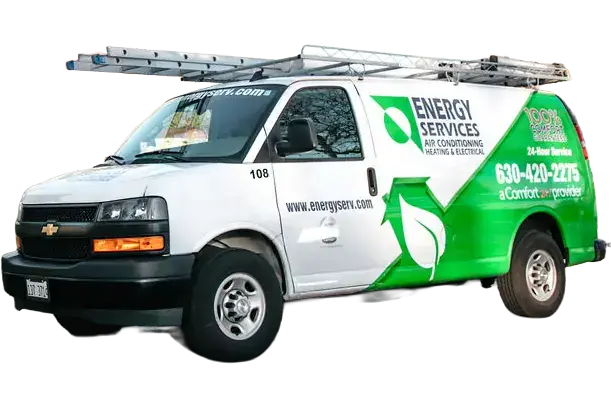
Furnaces that fail to ignite are among the most frequent calls we receive. The cause is often a dirty flame sensor, a failed igniter, or a fault in the control board. Because these components fail in predictable ways, we can usually identify the problem quickly and carry common replacement parts on the service vehicle. A furnace that ignites but blows cool air often points to a stuck limit switch, a blower issue, or, in a heat pump, a refrigerant charge that has drifted out of range.
Uneven heating is another problem we address regularly. When one room stays cold while another overheats, the cause may be leaky ductwork, an unbalanced damper setting, or an undersized system that cannot keep pace with heat loss. We trace these issues to their source rather than treating symptoms. Short-cycling—where the system turns on and off in rapid bursts—usually signals overheating from restricted airflow, an oversized unit, or a faulty control. Each of these has a distinct fix, and identifying the right one is the core of good heating service.
Technical Specifications We Pay Attention To
Good heating service depends on measured data, not guesswork. Temperature rise—the difference between the return air temperature and the supply air temperature—must fall within the range printed on the furnace rating plate, typically between 35 and 70 degrees depending on the model. A rise outside that band indicates an airflow problem or an incorrectly sized system. Gas manifold pressure, usually set around 3.5 inches of water column for natural gas, must match the manufacturer’s specification to produce correct heat output without wasting fuel.
For heat pumps, we verify that the defrost cycle clears frost from the outdoor coil and returns to heating mode promptly. We also confirm supplemental heat engages only when needed, since running electric strip heat unnecessarily raises energy use sharply. On every system, we confirm that safety limits open at their rated temperatures so the equipment shuts down before any component is damaged. These specifications are not optional details—they are what separate a system that runs safely from one that quietly wastes energy or poses a hazard.
Serving Homes Across the Region
Homeowners in Naperville rely on us for heating repair, AC repair, and complete HVAC service throughout the year. Northern Illinois winters test heating equipment hard, and the homes we serve range from older properties with aging furnaces to newer construction with high-efficiency systems and smart thermostats. We adapt our heating service to the specific equipment in each home rather than applying a one-size-fits-all approach.
Whether your system is a gas furnace, a heat pump, a dual-fuel setup, or a boiler, Energy Services Air Conditioning and Heating Company has the training and the tools to keep it running through the season. When something goes wrong, we respond quickly, diagnose accurately, and repair correctly the first time. And when a system reaches the end of its useful life, we help you understand your options for replacement so you can make a confident decision about your home’s comfort.
Schedule Your Heating Service
The best time to service a heating system is before you need it. A fall tune-up finds small problems before they become winter emergencies, and it keeps your system running at its rated efficiency all season. If your furnace is already showing signs of trouble—strange noises, weak heat, rising energy use, or frequent cycling—do not wait for it to fail on the coldest night of the year. Contact Energy Services Air Conditioning and Heating Company to schedule heating service and keep your home warm, safe, and comfortable through every cold month ahead.